
Privileged by nature, the city of Santa Catarina is one of the most beautiful in the state, with European characteristics and internationally recognized for hosting the largest school festival in Latin America, Femusc, which takes place in January
Music festivals are recognized events that bring together people of different ages and cultures with a common taste: music. If you have a passion for music and still haven’t decided what you’re going to do with family or friends in January, Jaraguá do Sul can be an excellent choice. In January, the city hosts the largest school festival in Latin America, the Santa Catarina International Music Festival (Femusc), which, in 2025, completes its 20th edition..
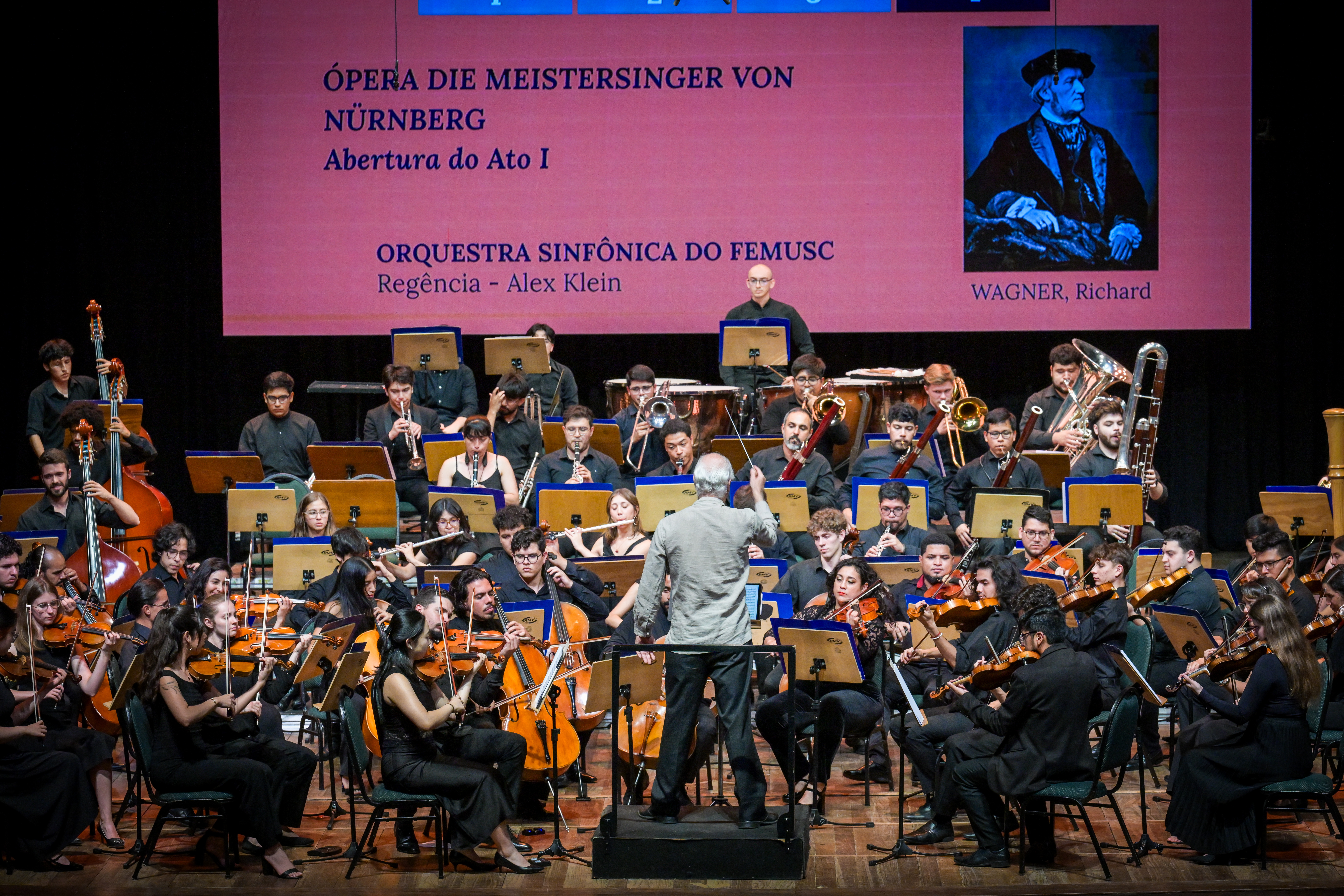
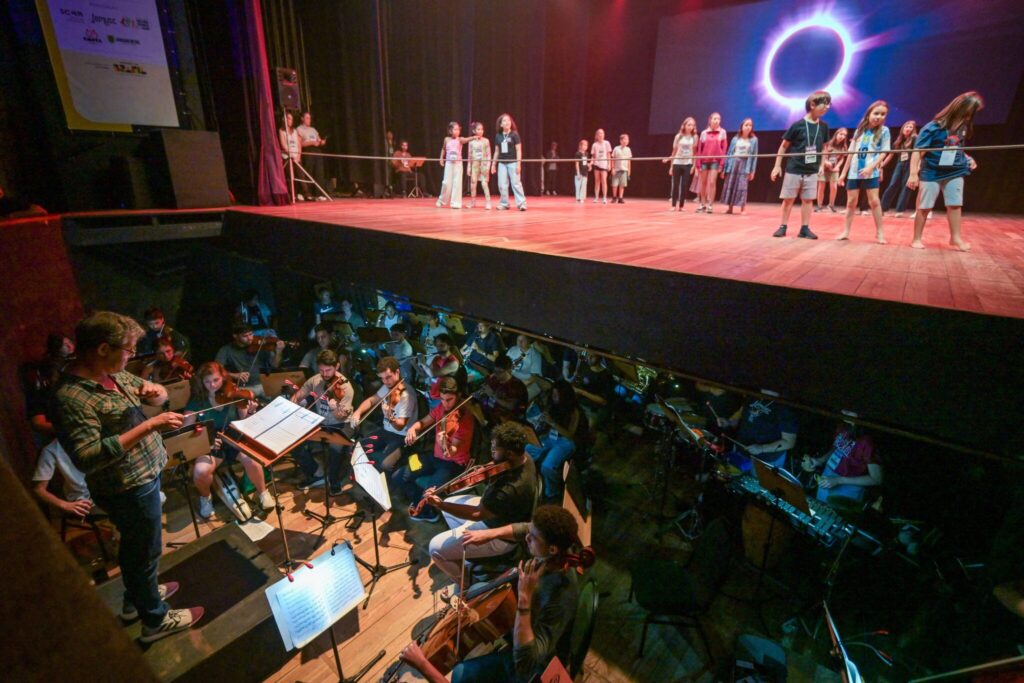
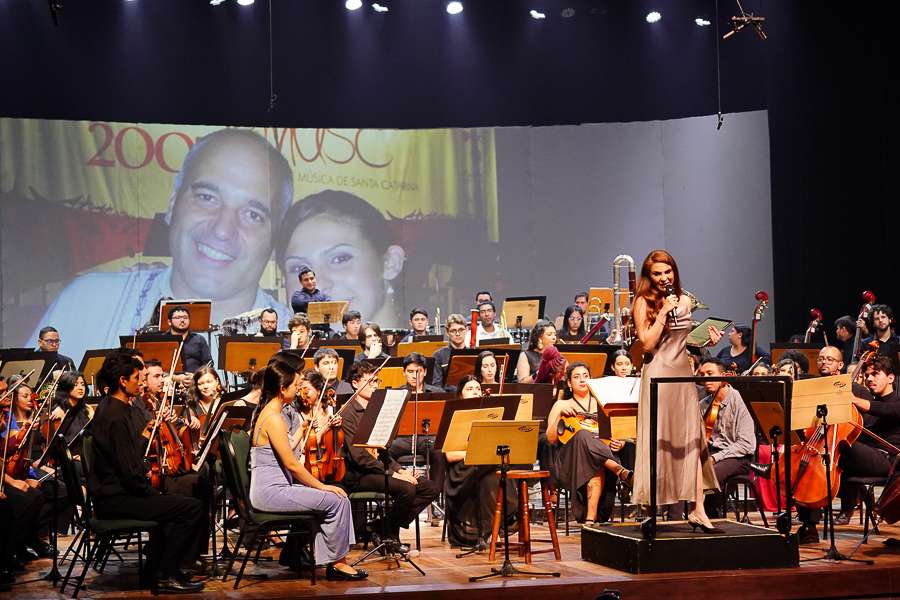
From the 12th to the 25th of January, FEMUSC transforms Jaraguá into the most important cultural center of the Brazilian South Pole. Beginner and professional musicians from 20 nationalities will be circulating and performing freely around the city. The event offers a unique experience with daily shows of classical music and MPB, in addition to operatic performances and many solos from international exponents. The expectation is that for this edition, FEMUSC will reach more de 200 presentations.
At SCAR (Sociedade Cultura Artística), one of the most complete cultural centers in Brazil with 10 thousand m2, the public has the opportunity to leave an auditorium  Listening to Brazilian music with the participation of guitarist Guinga, conducted by the pianist and arranger Marcelo Ghelfi, and the singer Lívia Nestrovski, for another with the most erudite of the songs in national and international formations. A mixture of rhythms that enchants the audience formed by tourists – musicians or not – coming from the four corners of the world.
The idealizer and conductor Alex Klein participates in the entire event, often as conductor, others in solo performances by Oboe, and many others as a storyteller of classical music, the importance of the festival for the training of hundreds of students over the years..
The Jaraguá do Sul of Femusc brings fourteen days of pure musicality. “The public makes a real journey through time from the classics of old music, classical music and the Brazilian popular”, says Alex Klein. “No one leaves the FEMUSC in the same way, it is a watershed, fundamental for the training of musicians and for the cultural formation of audiences of all ages”.
FEMUSC’s presentations have free and free admission, upon early withdrawal of tickets, and the great shows are also broadcast live, in high definition, by the festival’s YouTube channel: https://www.youtube.com/user/institutofemusc
prepare the bags
Jaraguá do Sul is located in the region Northeast of the state of Santa Catarina and the nearest airports in the city are in Joinville (54 km away), Navegantes (93 km), Curitiba (150kmm) and Florianópolis (200km).
The average temperature in January ranges from 21 to 29º C, ideal for those who enjoy a good beer. In this regard, the city does not disappoint either. Jaraguá do Sul is known for its excellent options of craft beer, with native factories in the region, awarded nationally and internationally. The best known are the Königs Bier brewery, the Maestro brewery, the Stannis beer, the brewery brewery and the Cherokee beer.
The best-known restaurants in the city are the Tasca Vô Manuel (Portuguese kitchen), the Confra Restaurante (Brazilian/Barbecue) and the Stannis Pub Jaraguá do Sul (Pub). But Jaraguá also surprises with German cuisine restaurants, such as the Armalwee and the typical General Kuster, both located in Malwee Park.
Other recommended culinary delights in the city are in the restaurants Compota (which also serves breakfast), very nice (pub, with excellent cocktails), Casa Rux Café Rural (in January, breakfast by appointment) and the Schroeder Platz (restaurant).
Beyond the Festival
Full of stunning landscapes, Jaraguá do Sul is a great tourist option for those who like to combine exuberant nature, good cuisine, great hotel infrastructure, pulsating culture and European traditions.
Framed by the mountain range of Serra do Mar, with elevations reaching up to 1,176 m and preserved Atlantic Forest areas, Jaraguá do Sul is an oasis for the practice of sports ranging from cyclotourism and nature walking, Passing through adventure tourism, such as canoeing on the Itapocu River, to free flight.
Colonized by European immigrants, especially Germans, Italians and Hungarians, Jaraguá do Sul still retains many traditions of its ancestors, including the typical annual architecture and festivals, such as Schützenfest, which relive the tradition brought by German immigrants and include Typical gastronomy, sport shooting practice, German folk dance performances and typical bands. Schützenfest is held in November.
capital of Santa Catarina of Strudel
The rich cuisine features typical dishes, especially from the German and Hungarian tradition. It’s worth trying the Stollen, a traditional German panettone from the typical General Kuster restaurant. Another delicacy that the tourist cannot miss is the cooked cheese (kochkäse) and the strudel of the bucolic café colonial strudelhaus, which offers recipes passed from generation to generation. Jaraguá do Sul holds the title of “Catital Santa Catarina do Strudel” and, trying the delicacy, it is not difficult to find out why.
Alpine Chiesetta Church
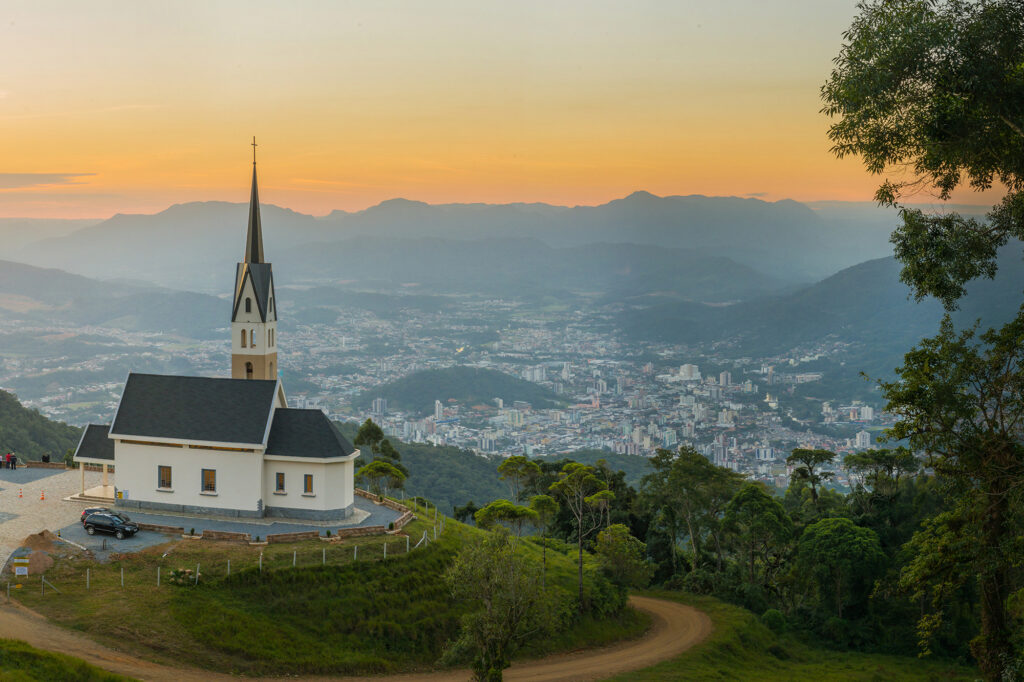
Chiesetta Alpina has the architecture inspired by the ancient Church of Saint Simon Apostle (Italy). Unanimous among tourists, the monument is a must visit.
Located on Morro Boa Vista, at an altitude of 570 m, Chiesetta Alpina has the architecture inspired by the ancient Church of Saint Simon Apostle (Italy) and celebrates the 150th anniversary of Italian unification. from Chiesetta, the tourist has a panoramic view of Jaraguá do Sul.
Free Flight: Morro das Antennas
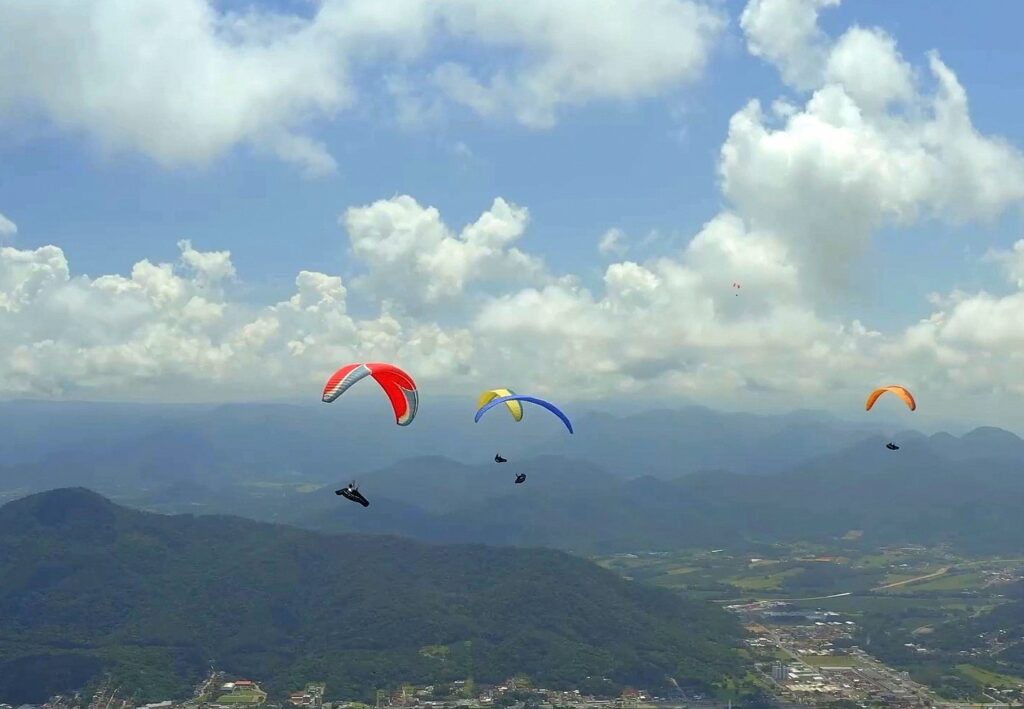
At 896m high, Morro das Antenas (one of the three peaks of Morro Boa Vista) is the point for paragliding, hang gliders and the stage for national competitions. From there also, tourists have a privileged view of Jaraguá do Sul, neighboring cities and semblances of the Serra do Mar. It is possible to arrive by car – it is recommended to use 4×4 vehicles. the slope of the road reaches 45º in some points; The route, of approximately 7 km, has a concrete floor to the Alpina Chiesetta. The more adventurous and conditioning up to date, can leave the car in the public parking lot in front of the church and and make a walk to the site.
Ecological Sanctuary: 133 species of cataloged birds
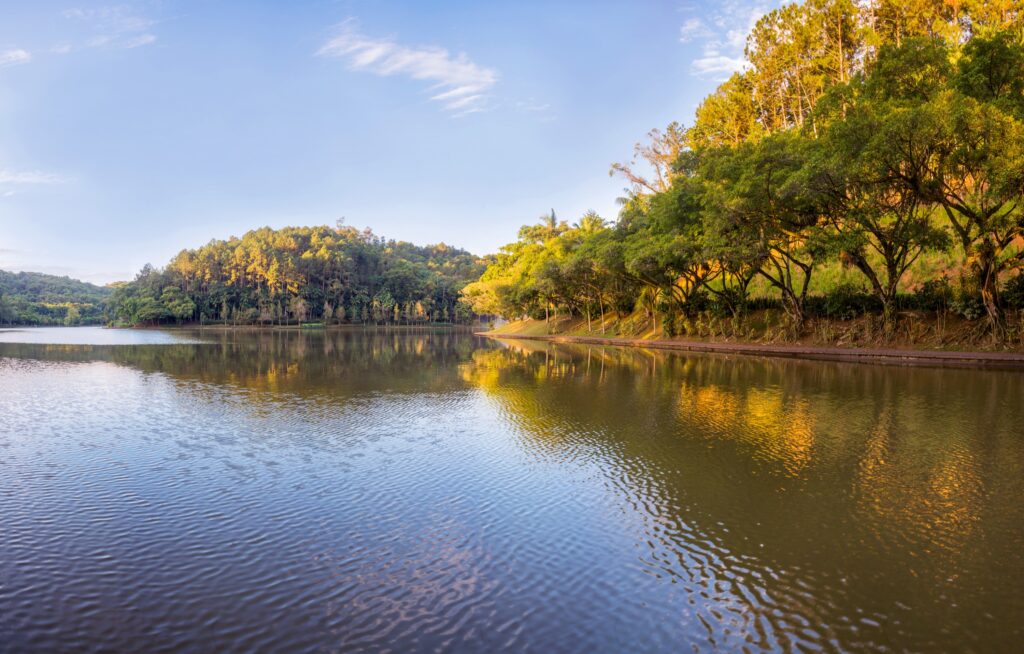
Another must-see tourist spot is the Malwee Park, a national reference in environmental preservation. The park has 1.5 million m² of preserved area, 16 lagoons, and 133 species of cataloged birds, in addition to a cultural space where the visitor has access to the Wolfgang Weege Museum complex, composed of two museums that portray the history of the colonizers of the region and have sculptures produced by international artists. One of the museums also enchants for its architecture, a half-timbered house, built in 1938.
Rural Set of Rio da Luz: Brazilian cultural heritage
In this valley of rich natural landscape, examples of the German heritage are found, such as the charming constructions in the half-timbered style, which use handmade constructive technique brought by German immigrants in which the walls are assembled from wooden beams embedded in each other and fixed by means of billets.
The tipping carried out by IPHAN, from the Rio da Luz, in Jaraguá do Sul, and the high testo, in the neighboring city, Pomerode, is the only tipping of rural landscape in Brazil.
Vale dos Encantos Cycling Tourism Circuit
Those who love to ride through nature will be delighted with this circuit, which in addition to Jaraguá do Sul covers other municipalities in the Itapocu Valley and has two routes (the sea and the mountain ones) with almost 500 kilometers in length..
Well signposted, the routes are divided into sections with different challenges. During the circuit it is possible to observe captivating scenarios passing through dirt roads from the interior, landscapes of rural areas, mountains, waterfalls, mountains and valleys. MORE INFORMATION: https://www.circuitovaledosencantos.com.br/
business tourism
With a solid and diversified industrial base, the city occupies a prominent place on the national scene, which also stimulates business tourism. It is the seventh largest economy in Santa Catarina, and stands out for its safety and quality of life, with one of the largest municipal human development index (IDHM) in the country.
The city is home to about 200,000 inhabitants with a territorial extension of 530 km² and about 187 km from the capital, Florianópolis.