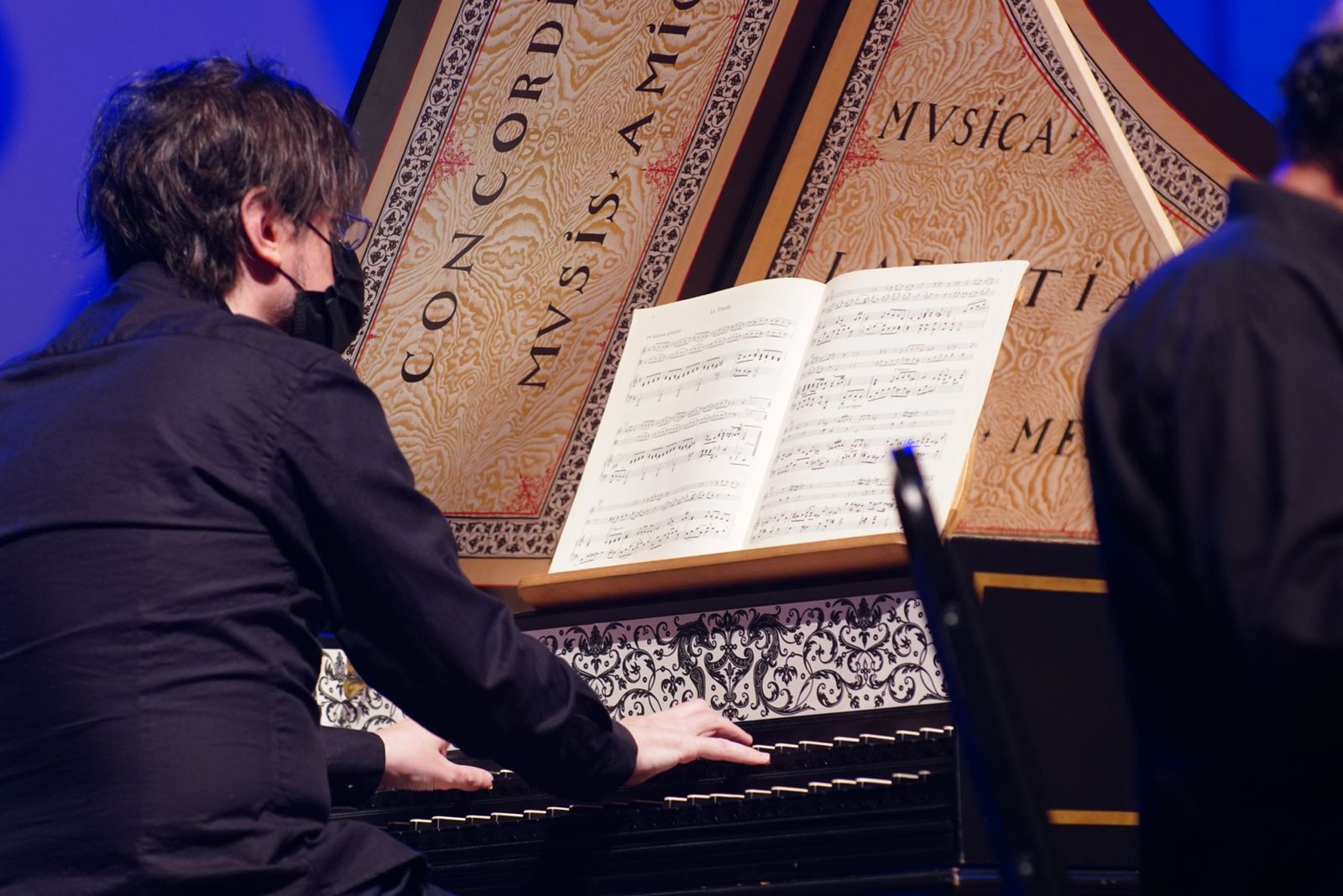
Rare and practically unknown to the general public, the harpsichord has a prominent role at the Femusc International Festival, held in Jaraguá do Sul, Santa Catarina, from January 16th to 29th. The instrument, which experienced days of glory in the 17th and 18th centuries, appeared in all the presentations of the Chamber Recitals, daily programming, held at the small theater of SCAR, always at 7 pm, of the Santa Catarina event.
The harpsichord is like the grandfather of the piano, its shape is the same, although smaller in structure, it is also a stringed instrument, and has a very characteristic sound, which refers to the sound of harps. With Femusc, and by the hands of the gaucho professor Fernando Cordella, one of the main harpsichordists of his generation, recognized as the best in Latin America, the harpsichord was praised and won students as disciplined as they were passionate.
“The demand for the instrument has grown in the last 10 years and has grown even more in the last five, the curve is very ascending and I hope that a great generation of harpsichordists will come, people dedicating themselves exclusively to this instrument”, says Cordella, who is the director of the Bach Society Brazil, coordinator and Cravo at the Baroque Music Workshop of EMMSP (Municipal Music School of São Paulo), and came to perform 88 times in the year before the pandemic.
At FEMUSC, considered the main non-competitive school event in the country, the five vacancies available for harpsichord were filled. Students have at their disposal eight units of the instrument that were brought especially to the festival. The carnations came from the personal collection of Cordela (2), from Curitiba (2), by the musicians Isabel Kanji and João Rival, from São Paulo (2), one from the Museu da Música de Timbó (Santa Catarina) and one belongs to the Scar Theater.
According to Alex Klein, creator and creative director of the festival, the objective is for Femusc to have its own stud. For this, the organization is in contact with William Takahashi, a luthier who has been manufacturing since the 1990s instruments based on 18th century pieces. instrument. “We don’t want to have a harpsichord, we want to have the harpsichord”, emphasizes Klein. A carnation costs about R$ 60 thousand. For comparison purposes, a harp costs R$ 150 thousand (the Femusc has a collection of 17), a Steinway piano, as well as the festival, R$ 500 thousand.
“The issue of a harpsichord in Jaraguá is more a matter of cultural ambition in this city, are we going to let the capitals have a great culture or are we going to make Jaraguá have everything a great city has and offer our teachers and students the very first quality that exists?”, he asks.