instruments will be used in the sacred work of Bach, considered one of the most extraordinary of all time
In order for the work of the German composer Johann Sebastian Bach, “The Passion According to Saint Matthew”, considered one of the masterpieces of Western music, could count on the maximum of realism in the representation of the suffering and death of Jesus Christ, the Festival of International Music of Santa Catarina (Femusc) will use two Oboes of Caccia (hunting oboes), which will come from Russia. The musician Aglaia Golubeva, known as “Glasha”, will bring directly from Moscow the instruments, borrowed by Professor Philip Nodel, from the Tchaikovsky Conservatory, one of the most important in the world, alongside that of Paris and Juilliard, from Nova York.
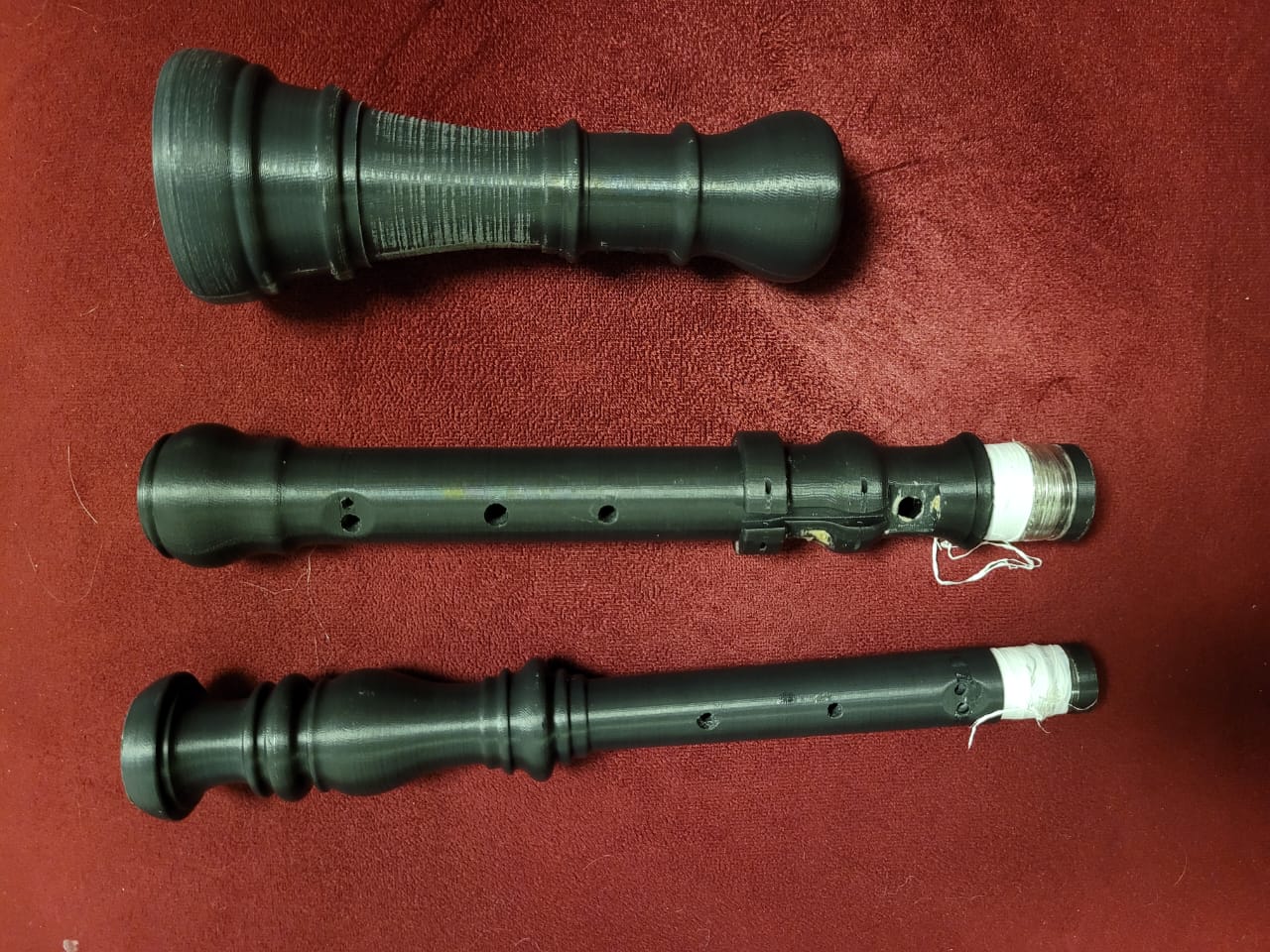
In addition to hunting oboes, for the preciosity of the show, the opera will also feature two d’amore oboés, which have the most serious sound than the soprano oboes, most commonly found. The instruments are being printed in 3D in Rio de Janeiro, and the project earned the nickname of ‘Oboé 3D’amores’.
3Damores was proposed by Alex Klein to Leonardo Fuks, a PhD in Musical Acoustics from KTH-Swecia (Real Institute of Stockholm Technology), and consists of designing and building the world’s first Oboe by means of printing. 3D. The design and printing are carried out in partnership with Thiago Palhares, a master’s degree in Chemistry from the Federal University of Rio de Janeiro (UFRJ). Klein’s intention is to make the Oboe better known and use the technology to lower the cost of the instrument.
According to conductor Alex Klein, creator of Femusc, the arrival of the instruments gives the perfect symbolism for the assembly of the opera at the festival. The speeches of Jesus are always accompanied by a choir of ropes. At the beginning of the presentation, soprano oboes indicate the daily life of Jesus, without any surprises. It is from the middle of the show that the musicians start to use the oboés d’amore: “They indicate the drama of the work, the denunciation of Judas and the arrest of Jesus”, says Alex.
The hunting oboes, with a sound called ‘bitter’, are used in the final part of the presentation and represent the approach of the death of Jesus. “Shortly after Christ’s death, Bach musically explains how salvation came into humanity,” explains Klein. The hunting oboes continue to play even after death, but the music no longer reproduces violence, but peace. “Symbolism is obvious, from then on the happiness of humanity would always be accompanied by the reality of Christ’s death and that someone (Christ) died so that this happiness was possible”, he concludes.
Opera
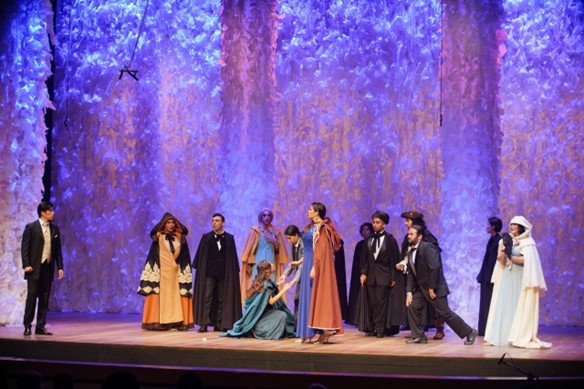
“A Paixão Segundo São Mateus”, recognized as one of the most extraordinary sacred works of all time, will be interpreted by the Baroque Orchestra of Femusc and by the Children’s Coral of Femusckinho.
The work will also be staged as an opera, combining music with the complete representation of the Passion of Christ. The show will be directed by the dramatic soprano singer, actress and teacher Céline Ibert de Figueiredo and the participation of Jabez Lima (Evangelista); Matheus Alvarenga Diniz (Jesus); Lorena Millar (Maria Madalena); Yunuen Flores (Maria).
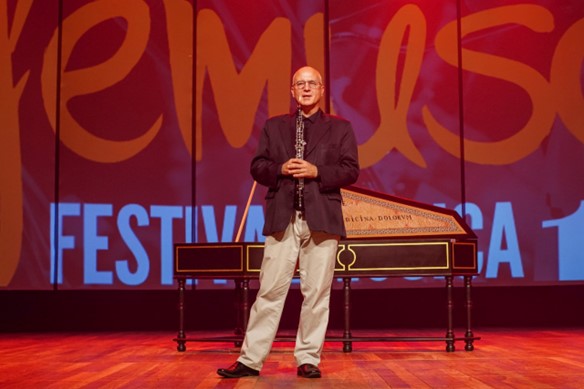
femusc
The 18th edition of FEMUSC – Santa Catarina International Music Festival, considered the largest school festival in Latin America, takes place from January 8th to 28th and opens the state’s cultural calendar. The festival celebrates the meeting between the erudite and the popular, bringing together great names from the national and international scene.
A cast of renowned teachers from different regions of Brazil and abroad, teaching programs that serve all age groups, and free concerts that take place in different parts of the city, make the festival a differentiated event, and a true legacy for the entire region. FEMUSC moves tourism, makes the economy spin, generates jobs and income, and spreads art and culture throughout the city, promoting the professional training of the musicians involved and providing unique moments to the public.
In total, there are 79 teachers, half foreigners, who go to Jaraguá do Sul to share knowledge and multiply experiences. Names such as singer Jane Duboc, conductor Roberto Duarte, violinist Simon Bernardini and instrumentalist Renato Borghetti (MPB) are among the highlights of this edition.
The grandeur of FEMUSC can also be represented through the numbers planned for 2023. According to the organizers, there are already more than 1,200 students registered – from Brazil and from another 32 countries – three weeks of activities and more than 200 presentations. “There is nothing like Femusc. It goes beyond music. It is a humanitarian project”, highlights conductor Alex Klein, one of the main oboists of today, winner of the “Grammy” in classical music and, creator of the festival.